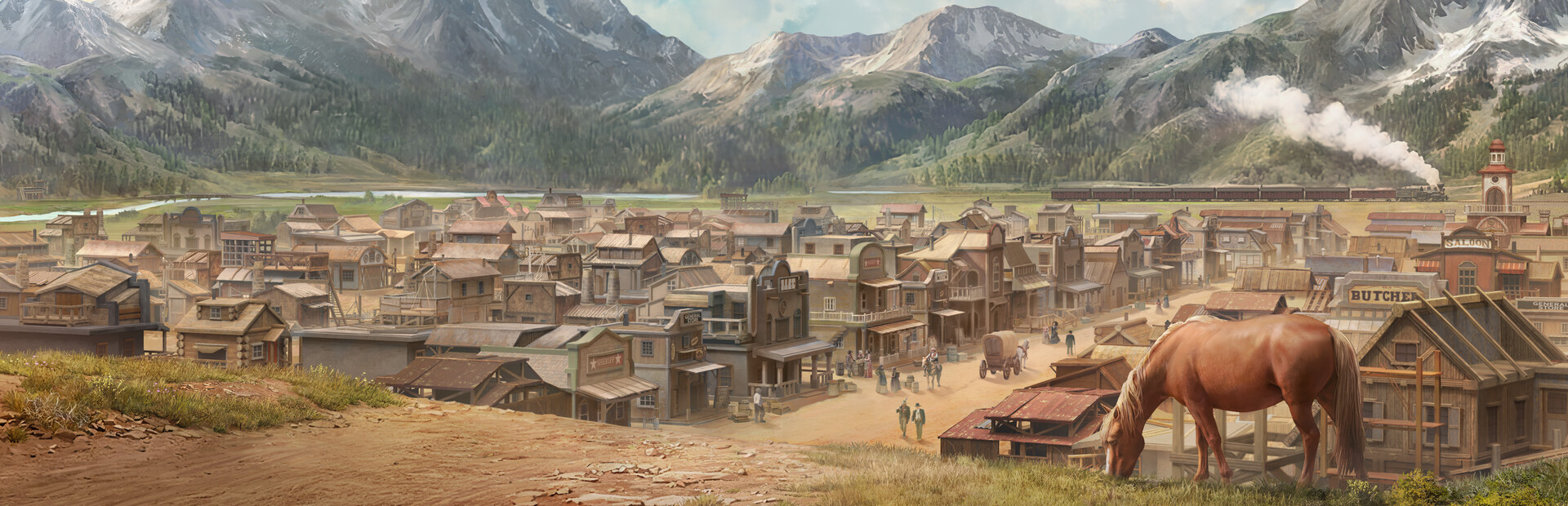
Wild West Pioneers Buildings & Upgrades: Town Hall, Warehouse, Housing and Production
Quick answer
A practical building and upgrade priority guide for compact settlements, storage, housing, and production chains.
Wild West Pioneers buildings should be planned around short travel distances, stable storage, enough housing, and production chains that can feed each other. The public playtest starts September 2, 2026, and Early Access releases September 25, 2026, on Steam, GOG.com, and Epic. Until the playtest confirms exact building values, the safest approach is to treat every building as part of a working settlement system rather than as a standalone upgrade.
Official descriptions emphasize production chains, settlers, trade routes, multiple settlements, and upgrades. That makes the best buildings the ones that remove bottlenecks: the town hall or central hub, warehouses, housing, roads, and production buildings that support food, wood, and future trade.
Quick Building Table
| Building type | Main job | Why it matters early | Planning note |
|---|---|---|---|
| Town hall / settlement hub | Anchors the settlement | Sets the center of work, storage, and expansion | Keep early districts close to it |
| Warehouse / storage | Collects and redistributes goods | Reduces transport delays between producers and consumers | Place between food, wood, housing, and roads |
| Housing | Holds settlers | Supports workforce growth and satisfaction | Build near jobs, storage, and services |
| Food production buildings | Create or process food | Protects the town from the first major shortage | Keep raw food, processing, and storage close |
| Wood and material buildings | Supply construction inputs | Enables more buildings and upgrades | Place near resource access and warehouse routes |
| Trade support buildings | Help move goods between settlements | Makes specialization useful later | Build after the local economy has surplus |
| Service and civic buildings | Support settler needs | May affect satisfaction, health, or prosperity | Add when basic survival is stable |
Building Upgrade Priority
| Priority | Upgrade target | Reason to prioritize it | Wait until playtest confirms |
|---|---|---|---|
| P0 | Warehouse capacity or access | Storage bottlenecks can slow every chain | Exact capacity values and upgrade cost |
| P0 | Housing availability | More settlers need places to live before the workforce can grow safely | Exact household sizes and satisfaction effects |
| P0 | Food chain buildings | Food stability supports settlement growth | Exact production rates and worker counts |
| P1 | Wood and construction chain buildings | Faster materials let you correct layout mistakes | Exact input and output ratios |
| P1 | Town hall / hub upgrades | Likely unlocks or supports broader settlement growth | Exact unlock order and requirements |
| P1 | Roads near production | Shorter routes improve every delivery loop | Exact road speed or pathing bonuses |
| P2 | Trade route infrastructure | Useful once one settlement has real surplus | Exact trade rules and route costs |
| P2 | Specialized production | Strong after food, storage, housing, and wood are stable | Exact advanced chain dependencies |
What to Build First
The best early building order is the one that keeps settlers productive without forcing them to cross the whole settlement for basic goods.
| Step | Build or check | Practical goal |
|---|---|---|
| 1 | Town hall or starting hub | Establish the center of the first settlement |
| 2 | Basic housing | Give the first workforce a short commute |
| 3 | Food source and processing | Start the survival chain before growth accelerates |
| 4 | Wood or construction materials | Keep expansion and repairs possible |
| 5 | Warehouse | Put storage where multiple chains can use it |
| 6 | Direct roads | Connect homes, jobs, storage, and the expansion edge |
| 7 | Extra housing and service support | Grow only when supply lines can handle more settlers |
Do not judge a building only by its output. A strong food building placed far from storage can behave like a weak building because transport eats the day. A modest production district with short roads is usually safer than a scattered town with too many isolated structures.
Town Hall Planning
The town hall or starting settlement hub should be treated as the center of gravity for the first town. Even if final mechanics change during the September 2, 2026 playtest, city builders with multiple settlements usually punish a weak opening center.
Plan around these uses:
| Town hall planning question | Why it matters |
|---|---|
| Can housing fit nearby without blocking production? | Settlers need quick access to jobs and goods |
| Is there room for a warehouse close by? | Early storage should not sit at the far edge of town |
| Can roads leave in several directions? | Future districts and trade routes need clean access |
| Is expansion space protected? | Upgrades may require more space around the core |
Avoid surrounding the town hall with random production buildings too early. Reserve space for housing, storage, and roads so later upgrades do not force a costly rebuild.
Warehouse Placement
The warehouse is one of the safest "best buildings" to prioritize because it helps every chain. Official descriptions emphasize production chains and trade routes, so storage should be planned as infrastructure, not as an afterthought.
Good warehouse placement:
| Location | Best use |
|---|---|
| Between housing and food | Shortens daily supply movement |
| Between logging and construction | Speeds building and upgrade flow |
| On a main road | Reduces traffic loops and delivery detours |
| Near future trade access | Prepares for settlement-to-settlement movement |
Bad warehouse placement is any spot that forces food, wood, housing, and production workers to all walk through the same long route. Until exact pathing values are confirmed, build for short, readable movement.
Housing and Workforce Growth
Housing is not only population capacity. It shapes where workers live, how far they travel, and how easily the settlement can satisfy needs. If housing is too far from jobs, production buildings may look staffed but still underperform.
Use this housing checklist:
| Check | Practical target |
|---|---|
| Homes near jobs | Keep the first workday short |
| Homes near food storage | Reduce supply friction |
| Room for more homes | Avoid panic expansion when settlers arrive |
| Room for services | Leave space for health, satisfaction, or prosperity buildings |
| Roads to warehouse | Keep residential blocks connected to the economy |
Add housing before you invite growth, but do not overbuild housing so aggressively that food and jobs cannot keep up.
Production Buildings
Production buildings should be grouped by chain, not scattered by appearance. Official descriptions emphasize production chains, so plan each production building by asking what it receives, what it creates, and where the output goes next.
| Production chain | Early layout rule |
|---|---|
| Food | Keep source, processor, warehouse, and homes close |
| Wood | Keep logging, processing, warehouse, and construction routes direct |
| Building materials | Put processors where raw goods and storage both stay reachable |
| Trade goods | Produce surplus only after local needs are stable |
| Specialized chains | Build after the first settlement can survive without constant fixes |
If a production building is starved for input, do not immediately add another copy. First check whether the raw source, worker housing, road, or warehouse location is the real bottleneck.
Multiple Settlements and Building Roles
Wild West Pioneers is planned around multiple settlements, not just one permanent town. That changes building priorities. The first settlement should be stable and flexible. Later settlements can specialize around resources, trade routes, or expansion goals.
| Settlement role | Buildings to emphasize |
|---|---|
| Founding town | Town hall, housing, food, wood, warehouse, roads |
| Food town | Farms or food sources, processing, storage, trade access |
| Forest town | Logging, wood processing, warehouse, direct roads |
| Trade hub | Storage, road access, buildings that support route flow |
| Frontier outpost | Housing, basic survival, resource-specific production |
Do not copy the same building layout into every settlement unless the map and needs justify it. A second town should solve a shortage or create surplus for trade.
Building Upgrade Mistakes to Avoid
| Mistake | Why it hurts |
|---|---|
| Upgrading before storage is stable | Better output can overflow or stall if goods cannot move |
| Building too far from housing | Workers lose time before production starts |
| Expanding housing without food | More settlers can turn a small shortage into a crisis |
| Ignoring roads | Buildings need movement paths to matter |
| Treating trade routes as magic fixes | Trade needs surplus, storage, and receiving capacity |
| Chasing advanced production too early | Complex chains fail if food, wood, and warehouse basics are weak |
FAQ
What are the best buildings in Wild West Pioneers? Until playtest values confirm exact numbers, the safest best buildings are the ones that reduce bottlenecks: housing, warehouses, food production, wood production, direct roads, and the town hall or settlement hub.
When should I upgrade buildings? Upgrade after the related chain is already working. For example, upgrade food production after storage and worker access are stable, not while raw goods are still stuck across town.
Where should I place the warehouse? Place the first warehouse between housing, food production, wood production, and the main road. Later warehouses can support specialized districts or trade route hubs.
Is the town hall the most important building? The town hall or starting hub is important because it shapes the settlement core. Official descriptions emphasize upgrades and multiple settlements, so plan around it as the center of early growth.
Should I build more housing as soon as possible? Build enough housing for workforce growth, but pair it with job availability, food, storage, and roads. Empty housing without supplies does not make a stable settlement.
Should every settlement have every production building? No. Once trade routes and multiple settlements matter, plan around specialization. One settlement can focus on food, another on wood or trade, as long as storage and routes can support the exchange.
Choose your next move
Related Guides
Once this question is solved, continue to the next decision without returning to search.
Wild West Pioneers Building Guide: Priority, Placement, Upgrades
A conservative Wild West Pioneers building guide for building priority, early vs later buildings, placement, production support, and upgrade caution.
Wild West Pioneers Settlement Buildings: Complete Frontier Construction Guide
Master Wild West Pioneers settlement buildings with our guide to construction, upgrades, production chains, and frontier city planning.
Wild West Pioneers Town Buildings: Complete Guide to Frontier Settlements
Master Wild West Pioneers town buildings with our guide to residential, commercial, and production structures for thriving frontier settlements.