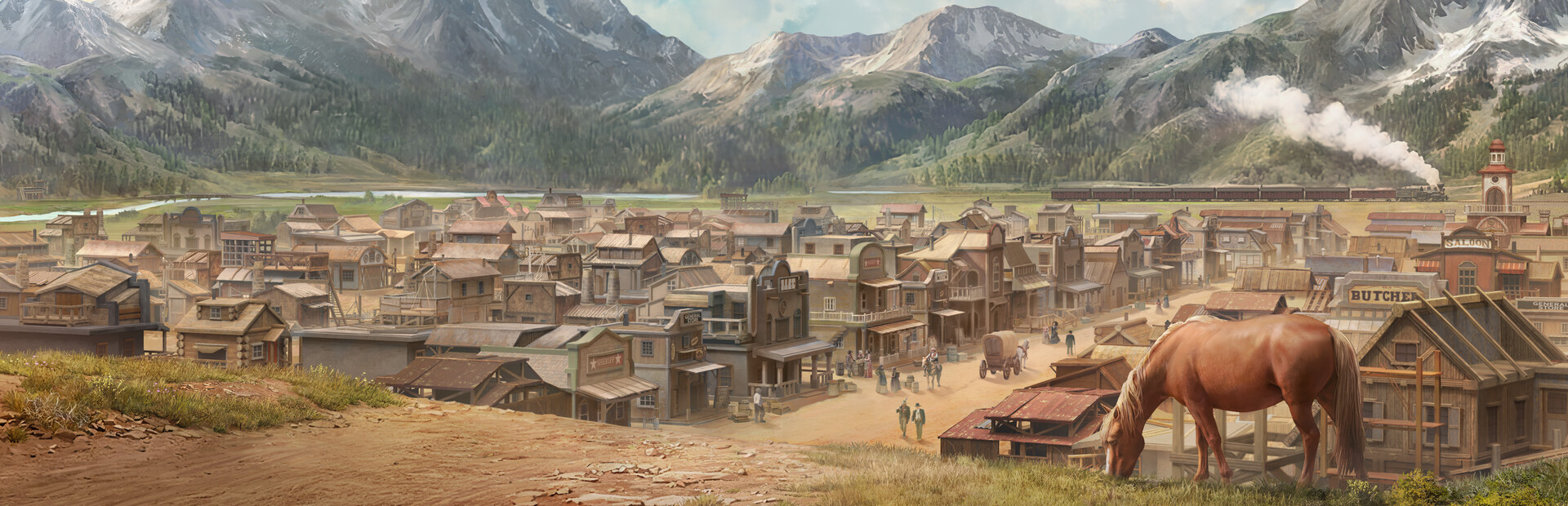
Mastering Wild West Pioneers Resource Chains: A Complete Production Guide
Quick answer
Learn how to optimize Wild West Pioneers resource chains for maximum settlement growth, trade efficiency, and frontier expansion success.
Why Production Chains Define Your Frontier Success
Building a thriving frontier settlement requires more than just placing buildings randomly across the map. In Wild West Pioneers, resource chains form the backbone of every successful town, determining whether your settlers flourish or fail. Understanding Wild West Pioneers resource chains early gives you a critical advantage when expanding into uncharted territory.
Developed by Empire Craft Studios and published by Toplitz Productions, this city builder combines classic mechanics with modern accessibility. Wild West Pioneers resource chains demand strategic thinking, careful planning, and adaptability as your settlement grows from a modest outpost into a bustling frontier hub.
Every settler represents a real character with specific needs rather than a backend calculation. This design philosophy means your production networks must scale proportionally as population increases, creating an engaging management challenge that evolves throughout gameplay.
Understanding the Core Production System
The production system in Wild West Pioneers operates on a straightforward but deep principle: raw materials flow through processing facilities to become finished goods that satisfy settler demands. Unlike simpler city builders where resources appear automatically, this game requires you to establish complete supply lines from extraction to consumption.
Several interconnected elements define how production functions:
- Raw resource extraction from nearby terrain features
- Processing facilities that transform materials into usable goods
- Distribution networks connecting production to residential areas
- Storage management preventing waste during surplus periods
The day and night cycle adds temporal complexity to your planning. Production continues around the clock, but observing when certain activities peak helps you identify bottlenecks and optimize worker assignments.
| Production Element | Function | Early Game Priority | Late Game Priority |
|---|---|---|---|
| Raw Extraction | Gathers base materials | Critical | Moderate |
| Processing Facilities | Refines raw materials | High | Critical |
| Storage Buildings | Preserves surplus goods | Low | High |
| Distribution Points | Delivers goods to settlers | Moderate | Critical |
| Trade Infrastructure | Exchanges goods between settlements | Unavailable | High |
Essential Resource Chain Categories
Wild West Pioneers features dozens of buildings and production chains, but several foundational categories determine whether your settlement thrives or collapses. Prioritizing these core categories ensures stable growth and prepares you for advanced gameplay mechanics.
| Resource Category | Primary Inputs | Key Buildings | Settler Need Fulfilled | Expansion Impact |
|---|---|---|---|---|
| Food Production | Farmland, water, labor | Farms, mills, bakeries | Basic sustenance | Gates population growth |
| Wood Processing | Forested terrain, labor | Lumber camps, sawmills | Construction capability | Enables all building |
| Trade Goods | Refined materials, workshops | Craft workshops, trading posts | Economic prosperity | Funds expansion |
| Health Facilities | Clean water, infrastructure | Clinics, bathhouses | Settler happiness | Attracts new residents |
| Residential Housing | Wood, food, land space | Houses, upgraded dwellings | Shelter and comfort | Increases population cap |
Each category interconnects with others, creating a web of dependencies. Food production requires labor, which requires housing, which requires wood, which requires lumber camps. Breaking any link cascades problems throughout your entire settlement network.
Food Production: Your First Critical Chain
Food represents the most vital resource chain during early gameplay. Without adequate food production, settler happiness plummets rapidly and population growth stalls completely. A typical food chain follows this progression:
- Establish farmland near reliable water sources
- Construct processing facilities like grain mills
- Build distribution points for finished food goods
- Scale production capacity as population demands increase
Player experience suggests that maintaining food surplus of approximately 20% above current consumption provides optimal buffer against sudden population increases or temporary production disruptions.
Building Your First Production Network
Starting a new settlement requires careful sequencing of your initial Wild West Pioneers resource chains. Rushing into complex manufacturing before securing fundamental supplies leads to resource shortages and dissatisfied settlers.
| Development Phase | Primary Focus | Recommended Buildings | Expected Outcome |
|---|---|---|---|
| Phase 1 | Basic survival | Lumber camp, farm, well | Stable resource generation |
| Phase 2 | Population growth | Houses, food processor | Increased settler capacity |
| Phase 3 | Economic foundation | Workshop, trading post | Trade route establishment |
| Phase 4 | Specialization | Upgraded production, mayor office | Optimized chain efficiency |
| Phase 5 | Regional expansion | Expedition wagons, new settlement | Multi-city resource network |
Following this phased approach ensures each production chain receives adequate support before adding complexity. Community reports indicate that settlements following structured development paths achieve sustainable growth significantly faster than those expanding haphazardly.
Strategic Leader Appointments
Your choice of mayors and sheriffs directly impacts production chain efficiency. Each leader offers unique perks that can boost specific resource categories or improve overall settlement function. Consider your current production priorities when making appointments.
For example, if your food production chain struggles to keep pace with population growth, appointing a mayor with agricultural bonuses provides immediate relief. Similarly, a sheriff focused on trade can enhance your resource exchange capabilities with neighboring settlements.
Advanced Resource Management Strategies
Once your basic Wild West Pioneers resource chains operate smoothly, advanced optimization becomes the key to sustained growth and regional dominance. Several strategies can dramatically improve your production efficiency and prepare your settlements for large-scale expansion.
| Optimization Strategy | Implementation Method | Primary Benefit | Risk Consideration |
|---|---|---|---|
| Settlement Specialization | Focus each town on specific resources | Higher production volume per resource | Dependency on trade networks |
| Buffer Stockpiling | Maintain excess storage of critical goods | Protection against disruptions | Increased storage infrastructure costs |
| Modular Production Blocks | Build self-contained production zones | Easier management and scaling | Higher initial investment required |
| Cross-Settlement Trade | Exchange surplus between settlements | Balanced resource distribution | Trade route vulnerability |
| Phased Building Upgrades | Upgrade facilities incrementally | Continuous production during improvements | Temporary efficiency reduction |
Balancing Supply and Demand
Every production chain must balance output with actual settler demand. Overproduction wastes resources and consumes valuable storage space, while underproduction causes happiness decline and potential population loss. Monitor your settlement's needs dashboard regularly to identify imbalances before they become critical problems.
Maintaining approximately 15-20% excess production capacity provides optimal buffer against population growth spikes and temporary disruptions. This margin allows you to absorb new settlers without immediately expanding production, giving you time to plan rather than react desperately.
Trade Routes and Multi-Settlement Logistics
The strategic map transforms resource chain management from local optimization to regional planning. As you establish new settlements, trade routes become essential for distributing resources across your growing frontier network. Wild West Pioneers resource chains extend beyond single settlements, creating complex logistical challenges.
Effective trade route management requires understanding several core principles:
- Complementary specialization: Different settlements should focus on different resource chains based on local terrain advantages
- Route efficiency: Shorter, safer routes reduce transportation costs and delivery time
- Demand matching: Trade flows must align precisely with each settlement's specific resource needs
- Redundancy planning: Multiple routes for critical resources prevent complete supply cutoff during emergencies
Preparing for Railroad Integration
The upcoming railroad network feature will revolutionize trade route mechanics significantly. Preparing your settlements for railroad integration means positioning production facilities with future connectivity in mind. Settlements located along likely rail corridors gain substantial long-term advantages.
Consider these preparation steps during your current playthrough:
- Identify probable rail corridors between major settlements
- Reserve land parcels for future rail infrastructure development
- Concentrate high-volume production facilities near potential rail hubs
- Establish trade relationships with settlements positioned along likely routes
FAQ
What are Wild West Pioneers resource chains?
Wild West Pioneers resource chains are interconnected production systems that transform raw materials into finished goods needed by settlers. Each chain begins with resource extraction, moves through processing facilities, and ends with distribution to consumers. Managing these chains efficiently represents the core gameplay loop.
How many production chains will the game feature?
While the exact number remains unconfirmed, developers at Empire Craft Studios indicate dozens of buildings and production chains will be available at launch. These span categories including food, wood, trade goods, health, and residential needs, with additional chains unlockable through progression.
Can resource chains be shared between multiple settlements?
Yes, trade routes allow resource exchange between settlements you establish. This becomes essential as you expand, since different settlements can specialize in different resource chains based on local terrain and available raw materials, creating mutually beneficial economic relationships.
What happens if a production chain breaks down completely?
Broken resource chains cause cascading negative effects throughout your settlement. Settlers whose needs remain unfulfilled experience declining happiness, which reduces productivity and can lead to population loss. Maintaining buffer stocks and backup production capacity helps mitigate these risks significantly.
Choose your next move
Related Guides
Once this question is solved, continue to the next decision without returning to search.
Wild West Pioneers Food Production Guide: Keep Your Settlers Fed
Master Wild West Pioneers food production with tips on hunter cabins, butcher shops, and store placement to keep your town thriving.
Wild West Pioneers Production Chains Guide: Food, Wood, Storage & Trade
Plan Wild West Pioneers production chains around food, wood, warehouses, roads, trade routes, and multiple settlements before Early Access begins.
Wild West Pioneers Wood Production Guide: Current Playtest Notes
Plan Wild West Pioneers wood production with current playtest-era guidance for logging, sawmills, storage, roads, and logistics without unconfirmed ratios.