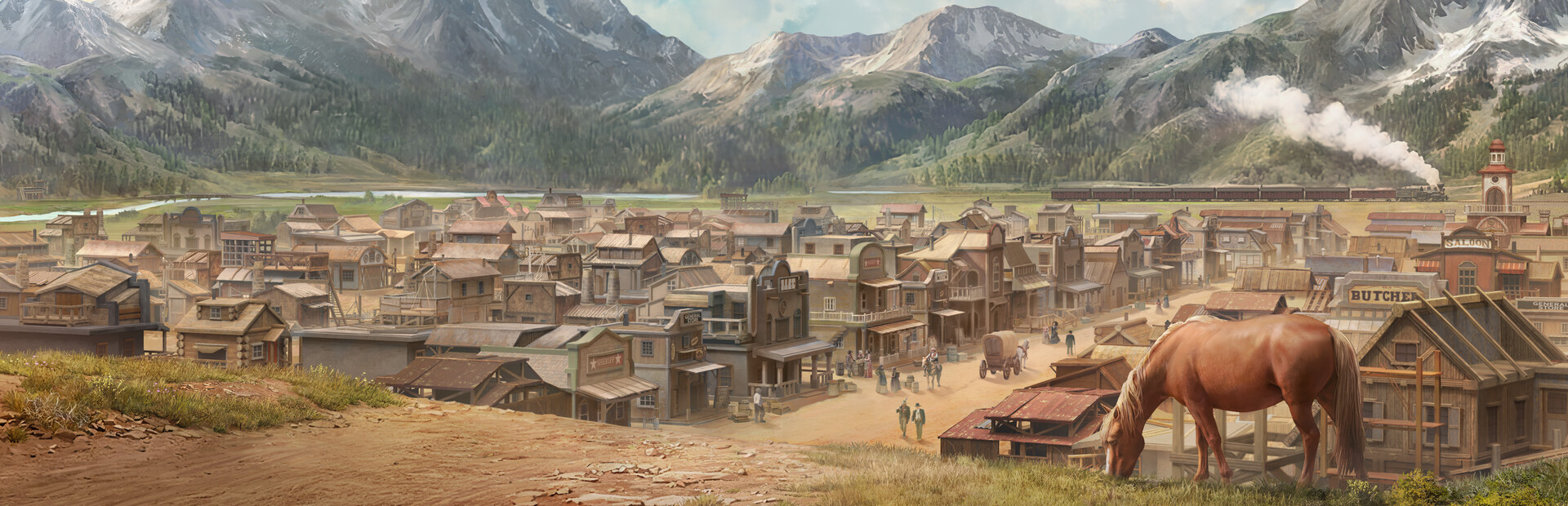
Wild West Pioneers Settlement Resources: Complete Frontier Guide
Quick answer
Master Wild West Pioneers settlement resources with our complete guide to production chains, trade routes, and frontier expansion strategies.
Building Your Frontier Empire From Scratch
The American frontier wasn't tamed overnight, and neither will your settlements be. Understanding Wild West Pioneers settlement resources is the single most important skill you'll need to develop if you want to transform a patch of untamed land into a bustling, prosperous town. Every decision you make—from where to place your first sawmill to how you allocate workers—ripples through your entire economy. Whether you're just arriving at your plot of land or already managing multiple interconnected villages, mastering Wild West Pioneers settlement resources determines whether your settlers thrive or pack up and head back east.
Developed by Empire Craft Studios and published by Toplitz Productions, this city builder combines classic genre mechanics with modern quality-of-life features, placing you squarely in the boots of a frontier leader responsible for every nail, plank, and bushel of wheat.
Core Resource Categories Every Settler Needs
At its heart, Wild West Pioneers is about balancing supply and demand across a growing population. Every settler is an individual with specific needs—food, shelter, health, and happiness—and failing to meet those needs causes your reputation to plummet and new settlers to stop arriving.
Based on official game information and early player experience, here's a breakdown of the primary resource categories you'll manage:
| Resource Category | Primary Function | Early Game Priority | Late Game Priority |
|---|---|---|---|
| Food | Sustains settler population | Critical | Critical |
| Wood | Construction and building upgrades | Critical | Moderate |
| Commercial Goods | Happiness and trade value | Low | High |
| Health Resources | Maintains settler wellbeing | Moderate | Critical |
| Trade Commodities | Inter-settlement exchange | None | High |
How Resources Flow Through Your Settlement
Unlike some city builders where resources exist as abstract backend numbers, Wild West Pioneers visualizes every step of production. You'll watch individual settlers chop wood, haul supplies, and work production chains in real time. This isn't just cosmetic—it actually helps you identify bottlenecks. If you see a queue forming outside your general store, you know your supply chain needs adjustment before happiness drops.
The game's day and night cycle also impacts resource availability and production efficiency, meaning you'll need to plan workflows around natural rhythms rather than running everything at maximum capacity around the clock.
Production Chains: The Backbone of Your Economy
Production chains are where Wild West Pioneers truly shines. Raw materials must be gathered, processed, and distributed before they reach your settlers, and each link in the chain requires workers, buildings, and time.
Essential Early-Game Production Chains
| Chain Type | Raw Material | Processing Building | End Product | Settler Need Fulfilled |
|---|---|---|---|---|
| Food Supply | Farmland | Mill / Bakery | Bread | Basic Sustenance |
| Construction | Forest | Sawmill | Lumber | Building Materials |
| Happiness | Grain | Brewery | Moonshine | Entertainment |
| Community | N/A | Church | Faith Services | Morale |
Community reports from early gameplay footage highlight an interesting strategy: building a church alongside a moonshine brewery early on can keep settler happiness surprisingly high without requiring complex supply chains. One player described their experience as starting with modest expectations, only to find that the right combination of buildings created a thriving community faster than anticipated.
Upgrading and Expanding Chains
As your settlement grows, you'll unlock the ability to upgrade buildings. This isn't just about producing more—it's about producing smarter. Upgraded buildings often process materials more efficiently, require fewer workers per unit of output, or unlock entirely new production options.
Key upgrade considerations:
- Residential buildings must be upgraded to accommodate higher-tier settlers with more complex demands
- Commercial buildings gain new production options and higher throughput
- Production facilities become more efficient, freeing up workers for other tasks
- Storage buildings increase capacity, letting you stockpile for lean times
Managing Multiple Settlements and Trade Networks
One settlement is only the beginning. The strategic map in Wild West Pioneers lets you plan expansion into uncharted territory, dispatch wagons full of daring explorers, and establish trading outposts that connect your growing network of villages.
Trade Route Fundamentals
Trade routes are the circulatory system of your frontier empire. They allow resource exchange between settlements, ensuring that a village rich in lumber can supply one struggling with food production. But trade routes require planning—they cost resources to establish and maintain, and leaving a settlement undersupported will cost you dearly in reputation and population.
| Trade Route Type | Resource Cost | Maintenance | Benefit | Risk Level |
|---|---|---|---|---|
| Local Wagon Route | Low | Low | Basic resource sharing | Minimal |
| Expedition Route | Moderate | Moderate | New settlement founding | Moderate |
| Railroad Network | High | Low | Mass resource transport | Low (once built) |
| Trading Outpost | Moderate | Moderate | External trade access | Moderate |
The Railroad Revolution
Preparing your land for the coming railroad network is a long-term strategic goal that transforms your economy. While early game trade relies on wagons and manual transport, the railroad enables mass movement of resources across vast distances with minimal ongoing maintenance. Planning your settlement layouts with future railroad connections in mind saves tremendous restructuring costs later.
Leadership Choices That Shape Resource Production
One of Wild West Pioneers' most distinctive features is its leadership system. You don't just build buildings—you appoint mayors and sheriffs whose unique perks directly affect how your settlement develops.
Leadership Impact on Resources
| Leadership Role | Resource Impact | Strategic Consideration |
|---|---|---|
| Mayor (Economic Focus) | Boosts production chain efficiency | Best for industrial settlements |
| Mayor (Social Focus) | Increases settler happiness | Best for population growth phases |
| Sheriff (Security Focus) | Reduces expedition risks | Best for expansion-heavy strategies |
| Sheriff (Trade Focus) | Improves trade route yields | Best for interconnected networks |
Choose carefully who you appoint. A mayor with production perks might seem ideal, but if your settlement is struggling with happiness and population retention, those bonuses won't matter when there's nobody left to work the chains.
Optimization Tips for Resource Management
Drawing from official game mechanics and community-reported strategies, here are actionable tips for maximizing your settlement's resource efficiency:
Start with food and wood. These two resources form the foundation of everything else. Without reliable food production, settlers leave. Without lumber, nothing gets built. Establish both chains before diversifying into luxury goods.
Monitor happiness metrics constantly. Happiness influences whether new settlers arrive. Job availability, health standards, and access to community buildings like churches all contribute. A settlement with full bellies but no faith services will still lose people.
Plan expansion before you need it. The urge to expand becomes unstoppable as you discover new resource streams. Have trade routes mapped and wagons ready before population pressure forces hasty, poorly planned expansion.
Use the strategic map for long-term planning. Don't expand randomly. Look for resource-rich areas that complement your existing settlements' weaknesses. A lumber-poor settlement should expand toward forests; a food-poor one should seek fertile land.
Balance automation with observation. The game rewards sitting back and watching your settlement operate. You'll spot inefficiencies—idle workers, bottlenecked storage, underused production buildings—that pure stat monitoring might miss.
Don't neglect the sandbox element. Every game of Wild West Pioneers plays differently thanks to its sandbox nature. Strategies that worked in one playthrough may fail in another depending on terrain, resource distribution, and random events.
Day-Night Cycle and Seasonal Resource Planning
The day and night cycle isn't just visual flavor—it directly impacts gameplay. City life changes from dusk till dawn, and production efficiency fluctuates accordingly. Understanding these rhythms helps you optimize worker assignment and building schedules.
| Time Period | Production Impact | Recommended Focus |
|---|---|---|
| Dawn | Workers begin shifts | Check overnight production outputs |
| Midday | Peak efficiency | Monitor high-priority chains |
| Dusk | Production winds down | Review daily resource tallies |
| Night | Minimal activity | Plan next-day assignments |
True leadership means adapting to these cycles rather than fighting them. Trying to maintain peak production around the clock leads to burned-out settlers and depleted resources.
Frequently Asked Questions
What are the most important Wild West Pioneers settlement resources to prioritize early?
Food and wood should be your immediate priorities. Food keeps your existing population alive and happy, while wood enables construction of every other building you'll need. Once those chains are stable, shift focus to happiness-generating buildings like churches and breweries to attract new settlers and maintain population growth.
How do trade routes work between multiple settlements?
Trade routes allow resource exchange between your interconnected villages. You establish them through the strategic map by dispatching wagons between settlements. Each route costs resources to set up and maintain, but enables settlements to specialize—one focusing on lumber production while another emphasizes food—creating a more efficient overall economy. The eventual railroad network dramatically improves trade route capacity and reduces maintenance costs.
Can I lose settlers if I mismanage Wild West Pioneers settlement resources?
Yes. Every settler has individual needs and demands. If happiness drops too low due to food shortages, poor health standards, or lack of employment, settlers will leave. This creates a downward spiral—fewer workers means reduced production, which further impacts happiness. Maintaining balanced resource allocation and monitoring happiness metrics is essential for sustainable growth. Community reports indicate that neglecting even one settlement in your network can have cascading consequences across your entire frontier empire.
Choose your next move
Related Guides
Once this question is solved, continue to the next decision without returning to search.
Ultimate Guide to Wild West Pioneers Game Resources and Production Chains
Master Wild West Pioneers game resources, production chains, and settlement expansion with our complete early access survival guide.
Wild West Pioneers Economy Guide: Playtest-Era Resource Flow
A playtest-era economy guide for Wild West Pioneers covering production chains, worker allocation, storage, trade routes, and bottlenecks without unverified ratios.
Wild West Pioneers How to Get Resources: Ultimate Guide
Master resource gathering in Wild West Pioneers with our complete guide to production chains, trade routes, and settlement expansion strategies.