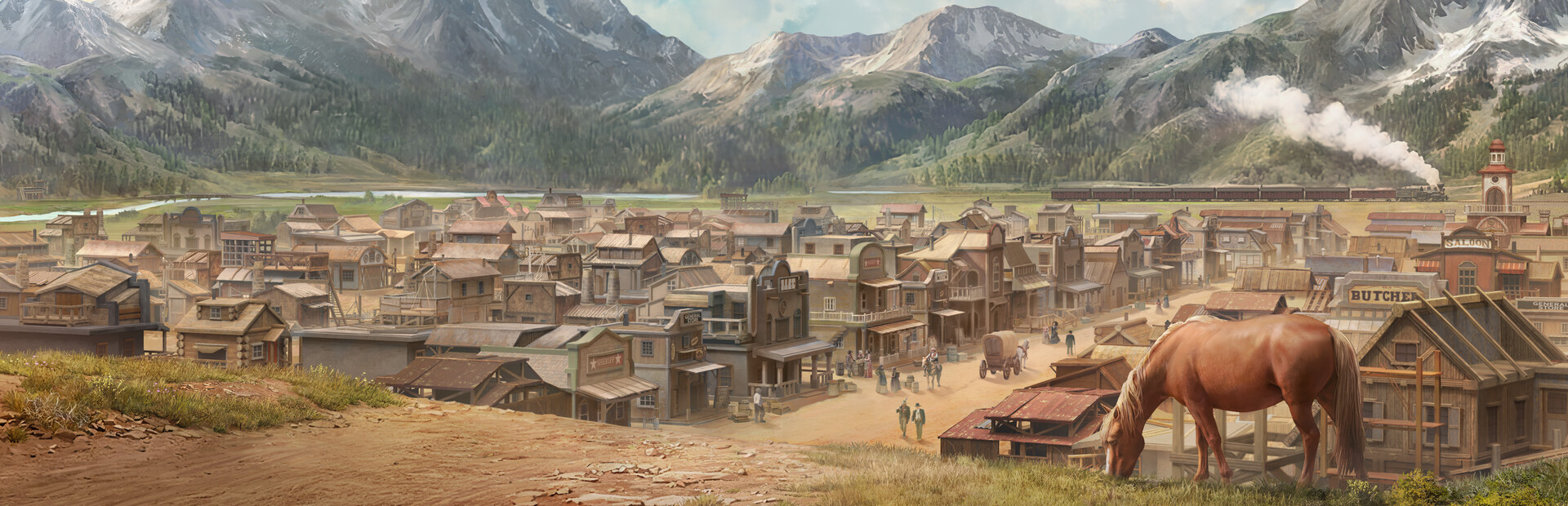
Wild West Pioneers Economy Guide: Playtest-Era Resource Flow
Quick answer
Use this conservative economy guide to plan resource flow, workers, storage, and trade routes before exact Early Access values are verified.
This playtest-era economy guide explains how to think about the Wild West Pioneers economy before the September 25, 2026 Early Access launch. The reliable answer is the structure of the economy: gather resources, process them into usable goods, store them close to demand, assign enough workers, and connect settlements when local supply is not enough.
Exact output rates, building costs, upgrade values, route speeds, and optimal ratios should be verified in the current playtest or Early Access build before they are treated as settled advice.
Quick Economy Answer
| Economy question | Conservative answer |
|---|---|
| What drives the economy? | Production chains, worker time, storage access, settler needs, and trade routes |
| What should beginners stabilize first? | Food, wood, housing, storage, roads, and enough workers for the first chains |
| What creates most bottlenecks? | Long walks, missing storage, unassigned workers, disconnected roads, and overexpansion |
| Are fixed ratios known? | Not enough to publish final ratios yet |
| Should old demo numbers be trusted? | Use them only as context until the current build confirms them |
Core Resource Flow
Wild West Pioneers is built around moving goods through a settlement instead of simply placing isolated buildings. A useful planning model is:
| Step | Economy job | What to check |
|---|---|---|
| Gather | Bring raw resources into the town economy | Source access, worker assignment, and road connection |
| Process | Turn raw goods into construction or survival goods | Input supply, processing building status, and staffing |
| Store | Keep goods close to where they are needed | Warehouse position, capacity, and route distance |
| Distribute | Move goods to settlers, builders, or another settlement | Demand, delivery paths, and trade route setup |
This model is safer than a fixed build order while the game is still in playtest. If the UI confirms exact production values later, those values should be added as observed facts with the build date.
Production Chain Bottlenecks
Most production chain bottlenecks are logistics problems. A town can have enough wood, food, or workers on paper and still fail if the chain is spread too far across the map.
| Bottleneck | First checks |
|---|---|
| Raw goods are not increasing | Valid source area, worker assignment, road access, and building status |
| Processed goods are missing | Input supply, processing queue, staffing, and storage space |
| Builders are waiting | Warehouse distance, construction demand, and delivery routes |
| Settlers lack essentials | Food flow, water access, housing coverage, and service distance |
| Expansion stalls the town | Whether the first settlement can spare workers and goods |
Fix the shortest confirmed problem first. Adding another distant building can make a bottleneck worse if workers must walk farther to use it.
Worker Allocation
Worker allocation should follow the current shortage. Early towns usually need enough people on food, wood, hauling, and construction before they can afford wider expansion.
| If the town is short on... | Recheck this first |
|---|---|
| Food | Food source, processing step, storage, delivery path, and worker count |
| Wood or lumber | Source access, processing step, warehouse position, and construction demand |
| Building progress | Construction material supply, builder availability, and storage distance |
| Transport capacity | Road shape, storage placement, and whether too many jobs compete for the same workers |
| Population growth | Housing, basic needs, and whether new settlers would overload supply |
Avoid locking the guide to named roles or perk effects until those details are verified in the current build. The durable rule is to assign labor around the shortage you can see.
Storage and Roads
Storage is the hinge of the early economy. A warehouse or storage hub should sit between producers, housing, and the next construction area instead of being buried behind homes or placed at the edge of town.
| Placement rule | Why it matters |
|---|---|
| Keep storage close to first production | Shorter hauling keeps chains active |
| Connect storage to direct roads | Workers can reach several jobs without detours |
| Leave space around storage | Later production or transport may need room |
| Do not scatter early industry | Compact chains are easier to diagnose |
| Reserve an expansion route | New districts should not break the first town core |
Roads matter because every extra trip can reduce the effective output of a chain. Until movement values are confirmed, treat short and readable routes as the safest optimization.
Trade Routes and Multiple Settlements
Official material emphasizes a strategic map, multiple settlements, expeditions, and trade routes. That supports planning for regional resource flow, but it does not yet justify fixed trade templates or exact route-profit claims.
| Expansion decision | Safer pre-release approach |
|---|---|
| First trade route | Use it to solve a clear resource gap, not as decoration |
| Second settlement | Choose a site that complements the first town's weak supply |
| Specialization | Test whether imports are reliable before making a town dependent |
| Transport upgrades | Leave room for future systems, but verify final rules before committing a layout |
When Early Access data is available, this page should separate observed route behavior from strategy advice.
Economy Checklist for the Playtest
Use the playtest to turn general guidance into measured advice:
| Verify | Why it matters |
|---|---|
| Exact building names and chain steps | Older demo terminology may not match the current build |
| Resource costs and output rates | Ratios should come from current UI or repeatable tests |
| Worker assignment rules | Labor bottlenecks decide whether chains actually run |
| Warehouse range and capacity | Storage can hide the real cause of shortages |
| Trade route setup | Multi-settlement strategy depends on confirmed transport behavior |
| Upgrade effects | Upgrade priorities should be based on measured impact |
Frequently Asked Questions
What is the main focus of the Wild West Pioneers economy? The main focus is resource flow: gather raw goods, process them, store them near demand, assign enough workers, and expand into trade routes only after the first settlement is stable.
How should I fix production chain bottlenecks? Check source access, assigned workers, road connection, processing inputs, storage distance, and current demand before adding more buildings.
Should I use fixed production ratios? Not yet. Treat exact ratios as unverified until the current playtest or Early Access build confirms them.
When should I use trade routes? Use trade routes after your first settlement can spare goods and workers. The best route should solve a real shortage or connect a resource your main town lacks.
Choose your next move
Related Guides
Once this question is solved, continue to the next decision without returning to search.
Ultimate Guide to Wild West Pioneers Game Resources and Production Chains
Master Wild West Pioneers game resources, production chains, and settlement expansion with our complete early access survival guide.
Wild West Pioneers How to Get Resources: Ultimate Guide
Master resource gathering in Wild West Pioneers with our complete guide to production chains, trade routes, and settlement expansion strategies.
Wild West Pioneers Settlement Resources: Complete Frontier Guide
Master Wild West Pioneers settlement resources with our complete guide to production chains, trade routes, and frontier expansion strategies.