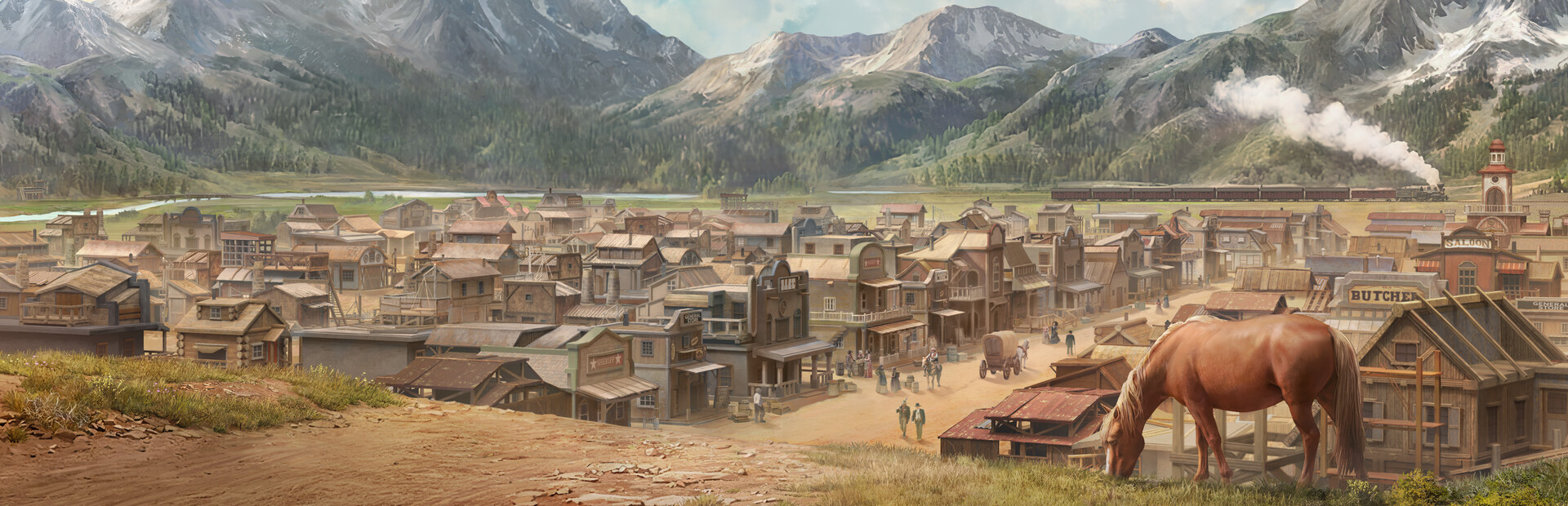
Wild West Pioneers Production Chains Guide: Food, Wood, Storage & Trade
Quick answer
Food, wood, warehouse, road, and trade-route planning for a stable frontier economy.
Wild West Pioneers production chains are the core of the game. The official store and publisher descriptions repeatedly point to food, wood, settler needs, trade routes, multiple settlements, and expeditions as the systems that make the frontier economy work.
This guide focuses on practical chain planning: how to keep raw materials close to processing, how to use warehouses, when to expand into trade routes, and why a beautiful town layout can still fail if goods travel too far.
Production Chain Basics
Every chain has four jobs:
| Stage | What happens | Beginner example |
|---|---|---|
| Gather | Settlers collect raw resources | Logging, hunting, farming |
| Process | A building turns raw goods into useful goods | Sawmill, butcher, food processor |
| Store | Goods move into a warehouse or stockpile | Central warehouse near main road |
| Consume / trade | Settlers use goods or settlements exchange them | Housing upgrades, food supply, trade routes |
If one stage is too far away, the whole chain slows down. Most beginner problems are not "not enough buildings"; they are "too much travel between buildings."
Food Production Chain
Food should be the first chain you stabilize. Settlers can tolerate a lot of rough frontier conditions, but a weak food chain quickly turns growth into a problem.
| Step | Placement advice |
|---|---|
| Food source | Place near hunting, farming, or water access where available |
| Processing | Keep close to the raw food source and road network |
| Warehouse | Put between food production and housing |
| Housing delivery | Keep homes close enough that food movement stays short |
| Backup supply | Add a second food source before founding another settlement |
For Early Access and playtest players, the main thing to watch is not just food quantity. Watch travel time. If workers spend all day crossing town, production numbers can look fine while settlers still struggle.
Wood and Building Materials Chain
Wood controls your ability to build, repair, and expand. A strong wood chain makes it easier to fix mistakes in housing, roads, and storage.
Recommended early chain:
Forest / trees -> logging -> sawmill or processing -> warehouse -> construction projects
| Chain part | Common mistake | Better setup |
|---|---|---|
| Logging | Too far from trees | Place near the resource edge |
| Sawmill | Isolated from both logs and storage | Put between logging and warehouse |
| Warehouse | Built after the town sprawls | Build early in the first production district |
| Roads | Decorative loops | Direct paths from logging to processing to storage |
Warehouse Placement
Warehouses are the hinge between production and settlement layout. A good warehouse shortens several chains at once. A bad warehouse turns every resource into a walking problem.
Good warehouse locations are near:
- The first food chain
- The first wood chain
- Main roads
- Housing districts
- Future expansion space
Avoid placing the first warehouse at the far edge of town unless that edge is also your main production district.
Road Efficiency
Roads are part of the production chain. They decide how long it takes settlers and goods to move between source, processor, storage, and consumer.
Use roads to create short, readable loops:
| Road pattern | Best use |
|---|---|
| Straight main road | Connect town center, warehouse, and expansion edge |
| Small production loop | Link raw resource, processor, and warehouse |
| Residential branch | Connect houses to services without crossing industry |
| Trade route access | Keep wagons from cutting through crowded housing blocks |
Multi-Settlement Production
Wild West Pioneers is not only a one-town builder. Official descriptions mention a world map that connects multiple settlements, scouting, expeditions, and trade routes. That means production chains eventually become regional.
| Settlement type | Best role |
|---|---|
| Founding town | Balanced food, wood, housing, and first storage hub |
| Forest town | Wood and building materials |
| Farming town | Food surplus for trade |
| Trade hub | Warehouse-heavy settlement near route intersections |
| Frontier outpost | Scouting, new points of interest, future expansion |
The goal is specialization. A second town does not need to rebuild every chain from scratch if trade routes can cover the gap.
Trade Routes and Bottlenecks
Trade routes are useful only if both ends of the route can handle goods. Before opening a route, check:
- Does the sending settlement produce a real surplus?
- Does the receiving settlement have storage?
- Are roads clear near the warehouse?
- Is the route solving a shortage or just moving goods randomly?
- Can the sending town survive if the route drains too much supply?
A food trade route from a farming settlement can rescue a mining or wood-focused town, but it can also starve the source town if you send too much too early.
Production Chain Priority List
| Priority | Chain | Why it comes here |
|---|---|---|
| P0 | Food | Keeps settlers stable and supports growth |
| P0 | Wood / planks | Enables construction and layout fixes |
| P0 | Warehouse | Reduces movement bottlenecks |
| P1 | Roads | Makes every chain faster |
| P1 | Housing support | Keeps new settlers close to jobs and goods |
| P1 | Trade route basics | Moves surplus between settlements |
| P2 | Specialized chains | Useful after the core economy is stable |
FAQ
What is the most important production chain in Wild West Pioneers? Food is the safest first answer because it supports settler stability. Wood follows immediately because it enables construction and upgrades.
Where should I place warehouses? Place the first warehouse between food, wood, housing, and the main road. Later warehouses should support specialized districts or trade hubs.
Are roads part of production chains? Yes. Roads affect travel time between gathering, processing, storage, and consumption.
Should every settlement produce everything? No. Once trade routes are available, specialize settlements around local resources and move surplus where it is needed.
When should I expand production chains? Expand when existing food, wood, storage, and roads are stable. Adding chain complexity before the basics are stable usually creates hidden shortages.
Choose your next move
Related Guides
Once this question is solved, continue to the next decision without returning to search.
Mastering Wild West Pioneers Resource Chains: A Complete Production Guide
Learn how to optimize Wild West Pioneers resource chains for maximum settlement growth, trade efficiency, and frontier expansion success.
Wild West Pioneers Food Production Guide: Keep Your Settlers Fed
Master Wild West Pioneers food production with tips on hunter cabins, butcher shops, and store placement to keep your town thriving.
Wild West Pioneers Wood Production Guide: Current Playtest Notes
Plan Wild West Pioneers wood production with current playtest-era guidance for logging, sawmills, storage, roads, and logistics without unconfirmed ratios.