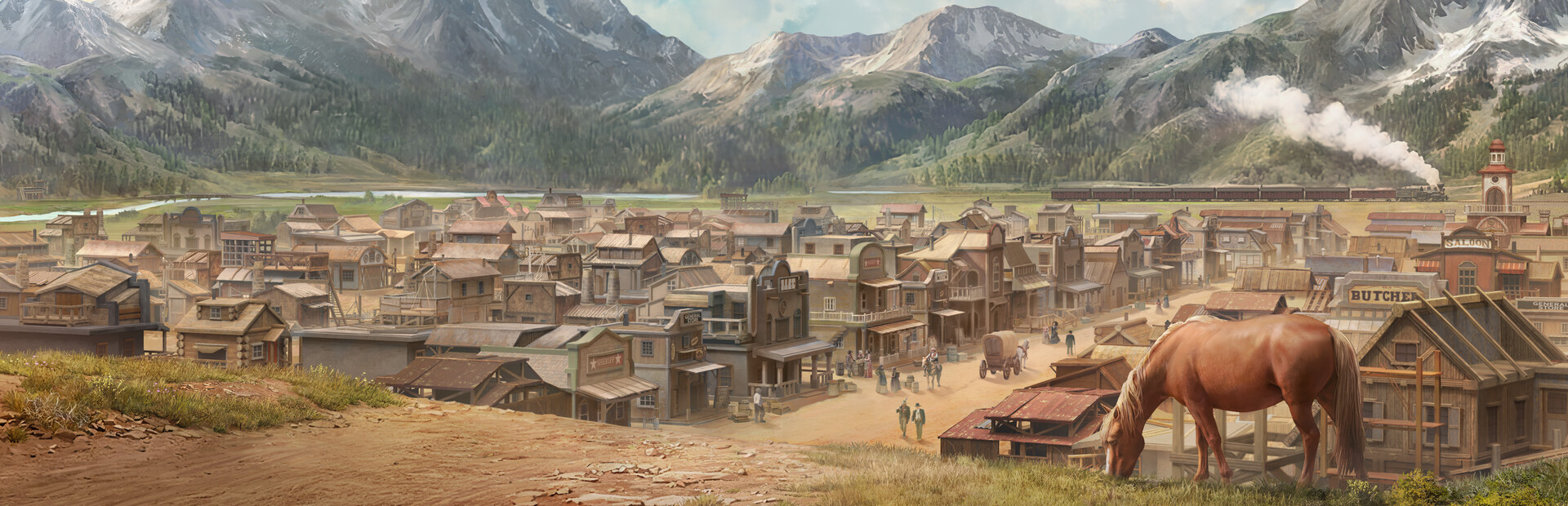
Wild West Pioneers Game Locations: Complete Map Guide & Settlement Tips
Quick answer
Discover all Wild West Pioneers game locations, biomes, and settlement maps. Learn how to expand your frontier empire with strategic outpost placement.
If you've been eagerly waiting to stake your claim on the digital frontier, understanding Wild West Pioneers game locations is your ticket to building a thriving pioneer empire. This highly anticipated city builder from Toplitz Productions drops you into the untamed American frontier, where every settlement decision shapes your legacy. Whether you're scouting for fertile valleys or mapping out trade routes between distant outposts, knowing the lay of the land gives you a massive advantage when Early Access launches on September 25, 2026.
The game promises a rich strategic world map that interconnects multiple settlements across diverse biomes, making Wild West Pioneers game locations more than just backdrop scenery — they're the backbone of your expansion strategy. Let's break down everything you need to know about the map system, biomes, settlement placement, and scouting mechanics before you saddle up.
Understanding the World Map System
Unlike traditional city builders that confine you to a single plot of land, Wild West Pioneers takes a broader approach. According to the game's official Steam store page, the strategic map is designed to help players plan their progress across an interconnected network of settlements.
The developers describe the system as follows in their Early Access documentation: players will launch with a world map that interconnects multiple settlements, each populated with fully simulated settlers. You can appoint citizen roles, set up expeditions to scout for new points of interest, and lead your community to prosperity through careful territorial planning.
Key Map Features at Launch
| Feature | Description | Strategic Value |
|---|---|---|
| World Map | Overhead view connecting all settlements | Plan multi-town expansion |
| Expedition System | Send scouts into uncharted territory | Discover new resource nodes |
| Trade Route Network | Connect settlements for resource exchange | Balance supply chains across regions |
| Points of Interest | Scattered landmarks with rewards | Incentivize exploration |
| Sandbox Generation | Procedural elements ensure replayability | No two playthroughs are identical |
The demo trailer reinforces this vision, noting that players will "explore new lands, secure valuable resources, and expand influence across the frontier." This isn't just flavor text — it's a core gameplay loop that revolves around discovering and developing new Wild West Pioneers game locations as you push westward.
Biomes and Terrain Types You'll Encounter
One of the most exciting aspects of the game's map design is the inclusion of multiple biomes. The Steam page confirms that Early Access will launch with "multiple biomes" as part of the core feature set, with the full version planned to include even greater "map variety."
While the developers haven't published an exhaustive biome list yet, community reports and available gameplay footage suggest several distinct environmental zones that will impact your settlement strategy:
| Biome Type (Expected) | Resource Affinity | Settlement Challenge Level |
|---|---|---|
| Fertile Plains | High crop yield, livestock | Low — ideal for starting towns |
| Dense Forest | Abundant timber, wildlife | Medium — requires clearing for space |
| Mountainous Terrain | Minerals, ore deposits | High — difficult transportation |
| Arid Desert | Rare minerals, trade routes | Very High — water management critical |
| River Valleys | Fishing, fertile soil, transport | Low-Medium — prime real estate |
Each biome presents unique production chain opportunities. A forested region naturally supports sawmills and woodworking industries, while mountainous areas open up mining operations. The key is matching your settlement's economic focus to the terrain it occupies.
Player Experience Insight: Based on demo footage, settlers' needs vary by location. A town built in an arid biome will struggle more with food production, making trade routes from fertile regions essential for survival.
Strategic Expansion: Scouting New Locations
Expansion in Wild West Pioneers follows a deliberate, strategic rhythm. You don't simply plop down a new town anywhere on the map — you need to scout first, evaluate the terrain, and then commit resources to founding a new settlement.
The official game description outlines this process clearly: "Send expeditions, establish trading outposts and dispatch wagons with daring explorers eager to found new settlements." This expedition mechanic is your primary tool for uncovering new Wild West Pioneers game locations throughout your playthrough.
Step-by-Step Expansion Process
| Step | Action | Requirement | Outcome |
|---|---|---|---|
| 1 | Dispatch Expedition | Available settlers + supplies | Reveals uncharted map areas |
| 2 | Evaluate Terrain | Scouted location data | Identifies resources and hazards |
| 3 | Found Settlement | Construction materials + settlers | New town established on world map |
| 4 | Establish Trade Route | Connected road or transport link | Resource exchange enabled |
| 5 | Assign Leadership | Mayor or sheriff appointment | Town perks activated |
The Steam page emphasizes that "one settlement is only the beginning." As you discover new resource streams and production chains, the urge to expand becomes woven into the gameplay loop. However, the developers also warn: "Don't leave anybody behind or it will cost you dearly." This suggests that neglecting established towns while pushing into new territories can have serious consequences for your overall reputation and settler happiness.
Trade Routes and Inter-Settlement Connectivity
Trade routes form the circulatory system of your frontier empire. Once you've established multiple settlements across different Wild West Pioneers game locations, connecting them becomes critical for balanced resource distribution.
The game's description mentions preparing "the land for the coming railroad network," which implies that transportation infrastructure evolves over time. Early game likely relies on wagon trains and basic roads, with railroads unlocking as a more advanced transport option in later stages.
Trade Route Considerations
- Distance matters: Longer routes require more time and potentially more wagons
- Resource specialization: Towns should focus on what their biome produces best
- Settler happiness: Disconnected towns suffer from unmet needs
- Bandit risk: Uncharted territories between settlements may pose threats (speculated based on frontier theme)
- Upgrade paths: Transport hubs and warehouses can be upgraded for greater efficiency
The day-night cycle also impacts trade and production. The Steam page notes that "day and night cycle have an impact on the game world," meaning your trade routes and production chains will visually and mechanically shift between dusk and dawn.
Tips for Optimal Settlement Placement
Drawing from everything we know about the game's map systems, here are actionable strategies for making the most of every location you settle:
Settlement Placement Priority Matrix
| Priority Factor | Why It Matters | Weight (1-5) |
|---|---|---|
| Water Access | Essential for food, health, and settler survival | 5 |
| Resource Diversity | Reduces dependency on trade for basic needs | 4 |
| Defensibility | Natural barriers protect against threats | 3 |
| Trade Proximity | Closer towns are cheaper to connect | 4 |
| Expansion Potential | Room for future building upgrades | 3 |
| Biome Synergy | Match settlement industry to local terrain | 5 |
Practical Placement Tips
- Start near rivers or valleys: The game's Steam description explicitly mentions "fertile soil and abundant resources" as key draws for westward expansion. Prioritize water-adjacent land for your first settlement.
- Scout before you commit: Always send an expedition to reveal terrain details before founding a new town. Blind placement wastes resources.
- Space settlements strategically: Too close and they compete for the same resources; too far and trade routes become inefficient. Aim for a moderate spread.
- Match industry to biome: Build sawmills in forests, mines in mountains, and farms in plains. This sounds obvious, but the game's production chain depth makes biome-matching genuinely impactful.
- Plan for railroad expansion: The developers mention preparing land for railroads. Leave corridor space between major settlements for future track laying.
- Monitor settler happiness across all towns: The game tracks individual settler needs. A neglected frontier outpost can drag down your entire network's reputation.
The demo trailer puts it bluntly: "Every settler matters. Keep them fed, healthy, and happy. Because unhappy settlers tend to complain a lot." Location choice directly influences how easily you can meet those needs.
What Early Access Means for Map Content
It's important to contextualize expectations. Wild West Pioneers enters Early Access on September 25, 2026, with the developers planning roughly one year of development before full release. The team has explicitly stated that the full version will include "new production chains, more advanced buildings and structures, new means of transportation, random events and map variety."
This means the current Wild West Pioneers game locations available at launch represent a foundation rather than the complete picture. Player feedback during Early Access will directly shape which new biomes, landmarks, and map features get prioritized.
Early Access vs. Full Release Map Features
| Feature | Early Access (Sep 2026) | Full Release (Expected 2027) |
|---|---|---|
| Biomes | Multiple confirmed | Additional biomes planned |
| World Map | Interconnected settlements | Expanded with new regions |
| Transportation | Wagons, basic roads | New means of transport (railroads?) |
| Random Events | Limited or absent | Full random event system |
| Map Variety | Sandbox baseline | Greater variety and generation options |
The developers describe themselves as "a small team of highly motivated developers" who want community involvement to shape the game. They plan to create devlogs and maintain open communication throughout Early Access, which means player feedback on map design and location variety will likely be taken seriously.
FAQ: Wild West Pioneers Game Locations
How many settlements can you build on the world map?
While the developers haven't specified a hard cap, the game's sandbox nature and emphasis on continuous expansion suggest there's no strict limit. The Steam page describes building "a thriving network of towns and trade routes," implying multiple settlements are expected. Your main constraints will be settler population, resource availability, and management complexity.
Are Wild West Pioneers game locations procedurally generated or hand-crafted?
The game appears to use a hybrid approach. The Steam page mentions "sandbox character" ensuring "no game will ever be the same," which strongly suggests procedural generation elements. However, specific points of interest and landmark locations may be hand-placed within the generated framework. Full details will likely emerge during Early Access.
Can you relocate or abandon a settlement if you choose a bad location?
This hasn't been explicitly confirmed by the developers. However, given the game's emphasis on strategic planning and the warning that leaving settlements behind "will cost you dearly," it seems the design philosophy discourages casual abandonment. Scouting thoroughly before founding a town is your best defense against poor placement decisions.
Will new biomes and map types be added during Early Access?
Yes. The developers have explicitly stated that "map variety" is part of their vision for the full version. Early Access players can expect the foundational map system at launch, with additional biomes, terrain types, and location features rolling out over the approximately year-long development period.
Wild West Pioneers is developed by a small independent team and published by Toplitz Productions. The game enters Early Access on Steam September 25, 2026. A playtest is currently available — request access through the official store page to get hands-on experience before launch.
Choose your next move
Related Guides
Once this question is solved, continue to the next decision without returning to search.
Wild West Pioneers Game Map: Complete Frontier Expansion Guide
Master the Wild West Pioneers game map with strategies for settlement expansion, trade routes, and frontier exploration in this 2026 city builder.
Wild West Pioneers Maps: Complete Guide to Terrain, Building, and Strategy
Master Wild West Pioneers maps with tips on terrain, water placement, road networks, and maximizing your frontier town's building space.
Wild West Pioneers Scouts & Expeditions Guide: Exploration and New Settlements
A practical Wild West Pioneers scouts and expeditions guide for exploration, new settlements, strategic map planning, route selection, and safe expansion.