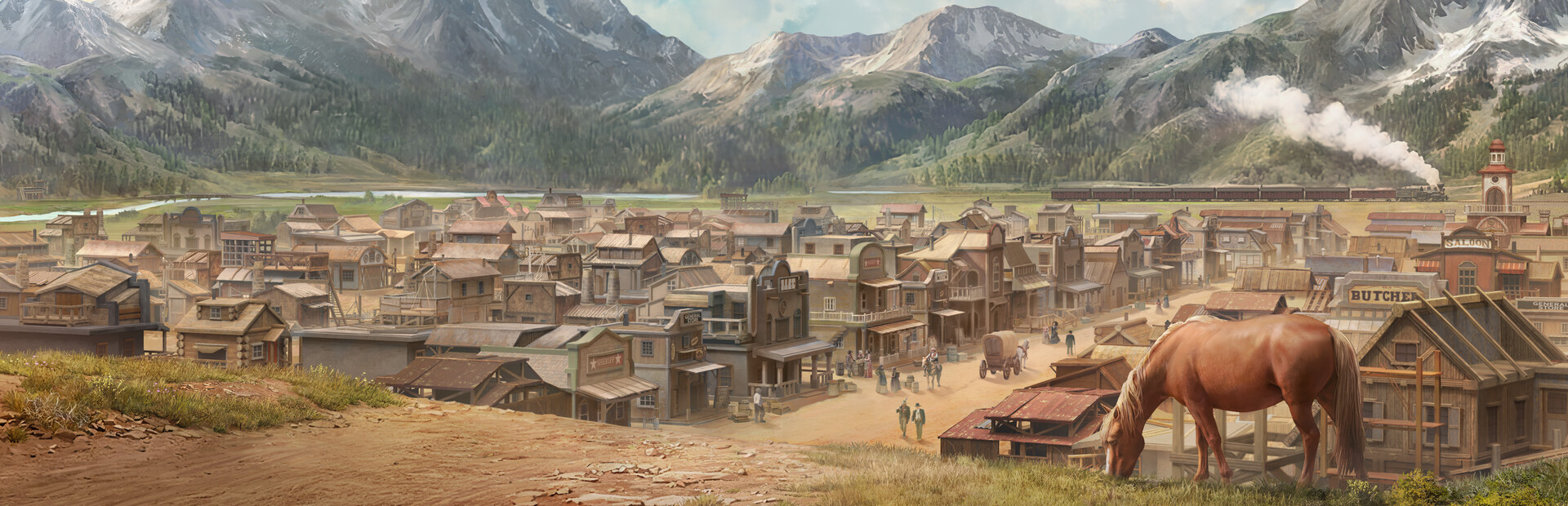
Wild West Pioneers Settlement Buildings: Complete Frontier Construction Guide
Quick answer
Master Wild West Pioneers settlement buildings with our guide to construction, upgrades, production chains, and frontier city planning.
Building Your Frontier Empire From the Ground Up
The American frontier wasn't tamed overnight — it took careful planning, resource management, and a whole lot of timber. In Wild West Pioneers, Wild West Pioneers settlement buildings form the backbone of your growing frontier empire, determining whether your settlers thrive or pack up and head back East. Whether you're laying down your first homestead or managing a network of interconnected villages, understanding how Wild West Pioneers settlement buildings function is essential to becoming a driving force in the expansion of the United States.
Developed by Empire Craft Studios and published by Toplitz Productions, this city builder blends classic genre mechanics with modern quality-of-life features. The game targets a 2026 release and promises a relaxing yet strategic experience where every building tells a story. Let's break down everything you need to know about constructing, upgrading, and managing your frontier settlement.
Understanding Building Types and Their Roles
Wild West Pioneers offers a wide variety of buildings split between commercial and residential categories. Each structure serves a distinct purpose — from keeping your settlers fed to producing materials needed for expansion. The key is balancing your construction priorities so that no settler's needs go unmet.
Commercial vs. Residential Breakdown
| Building Category | Primary Function | Example Structures | Settler Impact |
|---|---|---|---|
| Residential | Housing and population growth | Homesteads, cabins, boarding houses | Determines max population and happiness |
| Food Production | Sustenance and satisfaction | Farms, hunting lodges, bakeries | Directly affects settler happiness and survival |
| Resource Production | Raw material generation | Sawmills, mines, quarries | Feeds into secondary production chains |
| Trade & Commerce | Economic growth | General stores, trading posts | Enables resource exchange between settlements |
| Civic & Leadership | Governance and management | Town hall, sheriff's office | Influences city policies and growth modifiers |
The game emphasizes that every settler is a person with individual needs and demands. Job availability, health standards, and general happiness all factor into whether new pioneers will join your community. This means you can't simply spam residential structures — you need the commercial infrastructure to support them.
Key Building Considerations
- Population capacity: Each residential building supports a specific number of settlers
- Job creation: Commercial buildings employ settlers, keeping them productive and content
- Upgrade paths: Structures can be improved over time to meet evolving settler needs
- Day/night impact: The cycle affects building productivity and city life visualization
Understanding these categories is the first step toward mastering Wild West Pioneers settlement buildings and creating a settlement that stands the test of time.
Production Chains and Resource Management
One of the most engaging aspects of Wild West Pioneers settlement buildings is the production chain system. Rather than simply dropping a building and collecting resources, you'll need to think about how raw materials flow through your settlement and transform into finished goods.
Core Production Chain Examples
| Raw Material | Processing Building | Finished Good | End Use |
|---|---|---|---|
| Timber (Trees) | Sawmill | Lumber | Construction and upgrades |
| Wheat (Farmland) | Mill → Bakery | Bread | Settler food supply |
| Ore (Mine) | Smelter | Metal Tools | Building upgrades and trade |
| Hide (Hunting) | Tannery | Leather | Goods production and trade |
| Stone (Quarry) | Stoneworks | Cut Stone | Advanced construction |
Production chains create a satisfying loop where you watch raw materials transform into useful goods — and every step is visually represented by actual settlers doing the work. The developers emphasize that every job is executed by a person, not a backend value, which makes watching your settlement operate genuinely rewarding.
Tips for Efficient Production Chains
- Plan ahead: Position processing buildings near their raw material sources to minimize transport time
- Balance supply and demand: Overproducing one resource while neglecting another leads to settler dissatisfaction
- Monitor happiness levels: If production stalls, check whether settlers' basic needs are met first
- Use trade routes: When one settlement excels at a particular chain, trade surplus goods with others
Player experience from early previews suggests that production chains become significantly more complex as you expand, making early planning decisions critical to long-term success.
Upgrading and Expanding Your Structures
No frontier town stays small forever — or at least, it shouldn't. Wild West Pioneers settlement buildings feature upgrade systems that let you adapt to the ever-changing needs of your settlers. As your population grows and demands shift, upgrading existing structures often becomes more cost-effective than constantly building new ones.
Building Upgrade Tiers
| Upgrade Tier | What Changes | Resource Cost | Settler Benefit |
|---|---|---|---|
| Tier 1 (Base) | Basic functionality | Initial construction cost | Minimal needs met |
| Tier 2 | Increased capacity and efficiency | Moderate resource investment | Improved satisfaction |
| Tier 3 | Advanced features, higher output | Significant investment required | High happiness boost |
| Tier 4 (Max) | Peak performance, premium aesthetics | End-game resources | Maximum settler contentment |
Upgrading isn't just about numbers going up. The visual transformation of your buildings reflects the progress of your settlement, and watching a rough-hewn cabin become a proper homestead is part of what makes the game so satisfying.
Leadership Choices and Building Impact
The game lets you pick mayors and sheriffs whose perks directly affect city growth. This adds a strategic layer to building management:
- Mayors: May offer bonuses to construction speed, resource generation, or population growth
- Sheriffs: Can influence settler safety, happiness modifiers, or trade efficiency
- Careful selection needed: The wrong appointee can stall your settlement's development
Community reports indicate that matching leadership perks to your current building priorities is crucial — a mayor focused on food production won't help much if you're trying to rapidly expand residential capacity.
Strategic Placement and City Planning
Where you place buildings matters almost as much as what you build. The game gives you a strategic map to plan your progress, but the on-the-ground placement of individual structures determines your settlement's day-to-day efficiency.
Placement Strategy Comparison
| Strategy | Description | Best For | Risk |
|---|---|---|---|
| Cluster Approach | Group similar buildings together | Production efficiency | Vulnerable to single-point failures |
| Spread Model | Distribute buildings across the map | Risk mitigation | Longer transport times |
| Hub-and-Spoke | Central core with specialized outposts | Multi-settlement play | Requires careful trade route management |
| Linear Expansion | Build along a main road or path | Early game simplicity | Limits future restructuring |
Essential City Planning Principles
- Keep food production close to residential areas: Hungry settlers are unhappy settlers
- Position trade buildings near settlement edges: Facilitates easier trade route connections
- Reserve space for upgrades: Don't pack buildings so tightly that you can't expand them later
- Plan for the railroad: The game references preparing land for the coming railroad network, so keep transportation corridors open
- Leverage the sandbox nature: No two games play the same, so experiment with different layouts
The day/night cycle also impacts your city planning. Watching city life change from dusk till dawn isn't just cosmetic — it reflects the rhythm of your production chains and settler activities. Efficient leaders learn to optimize around these natural cycles.
Multi-Settlement Building Strategy
One settlement is only the beginning. As you discover new resource streams and production chains, the urge to expand becomes unstoppable. The game encourages sending settlers into uncharted territory to establish new villages, then connecting them through trade routes.
Settlement Network Planning
| Settlement Type | Primary Role | Key Buildings | Trade Focus |
|---|---|---|---|
| Founding City | Population center, governance | Town hall, diverse residential, civic | Imports raw materials, exports finished goods |
| Resource Outpost | Raw material production | Mines, quarries, logging camps | Exports raw materials |
| Agricultural Village | Food production | Farms, ranches, food processing | Exports food supplies |
| Trading Hub | Commerce and distribution | Trading posts, warehouses | Facilitates inter-settlement trade |
The strategic map helps you plan this expansion. Send expeditions, establish trading outposts, and dispatch wagons with daring explorers eager to found new settlements. Just remember the game's warning: don't leave anybody behind or it will cost you dearly. This interconnected approach to Wild West Pioneers settlement buildings creates a deeply satisfying management experience.
Frequently Asked Questions
What types of Wild West Pioneers settlement buildings are available?
The game features a wide variety of commercial and residential buildings, including homesteads, farms, sawmills, mines, trading posts, town halls, and sheriff's offices. Each can be upgraded through multiple tiers to accommodate evolving settler needs. Developer Empire Craft Studios has promised dozens of buildings and production chains at launch.
How do building upgrades work?
Buildings can be upgraded through multiple tiers, with each tier increasing capacity, efficiency, or output. Upgrades require resources and sometimes specific conditions to be met. The visual appearance of buildings changes with each upgrade, reflecting your settlement's growth from a rough frontier camp to a prosperous town.
Can I build multiple settlements?
Yes. The game is designed around multi-settlement play, where you establish new villages in uncharted territory and connect them through trade routes. Each settlement can specialize in different production chains, creating a network of interconnected frontier communities.
How does settler happiness relate to buildings?
Every settler has needs and demands that buildings must fulfill. Job availability, food supply, health standards, and housing all influence happiness levels. Only with sufficient happiness can you attract new settlers and continue expanding. The game treats every settler as an individual character, not just a population number.
Is there a sandbox mode for building?
Wild West Pioneers features sandbox characteristics, meaning no two games will ever be the same. You have freedom in how you construct and manage your settlements, choose leadership, and plan your expansion across the American frontier. The game is designed to be relaxing rather than stressful — sit back, chill, and watch your plans come to fruition.
Choose your next move
Related Guides
Once this question is solved, continue to the next decision without returning to search.
Wild West Pioneers Building Guide: Priority, Placement, Upgrades
A conservative Wild West Pioneers building guide for building priority, early vs later buildings, placement, production support, and upgrade caution.
Wild West Pioneers Buildings & Upgrades: Town Hall, Warehouse, Housing and Production
Plan Wild West Pioneers buildings, building upgrades, town hall growth, warehouses, housing, and production buildings before playtest values are confirmed.
Wild West Pioneers Town Buildings: Complete Guide to Frontier Settlements
Master Wild West Pioneers town buildings with our guide to residential, commercial, and production structures for thriving frontier settlements.